How Irish Pub NYC Culture Blends Tradition and City Energy
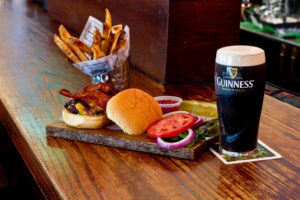
There is something distinct about walking into an Irish pub in New York and realizing, within seconds, that you are not in Dublin, Cork, or Galway, yet you are also nowhere else but an Irish space. The room might hold polished wood, framed county flags, a stout poured with practiced patience, and a bartender who knows how to speak to regulars without slowing the line. At the same time, the soundtrack of the place belongs to the city. A subway delay gets discussed at one end of the bar. A finance team closes out a rough Thursday at another. A pair of actors fresh off a downtown shift orders chips and a late pint before heading home.
That fusion is the real story of Irish pub NYC culture. It is not simply about importing a traditional public house model and dropping it onto a Manhattan block or a Queens corner. It is about adaptation. Irish pubs in New York have survived, and in many cases thrived, because they learned how to preserve the emotional core of the pub while absorbing the speed, diversity, ambition, and unpredictability of the city around them.
The result is a type of hospitality that feels both rooted and kinetic. It respects ritual, but it is not frozen in it.
The pub as a social institution, not just a theme
To understand why Irish pubs have such staying power in New York, it helps to start with what the pub means in Irish life. At its best, the pub is not merely a drinking venue. It is a place where community organizes itself. News travels there. Jobs get mentioned. Arguments start and settle. Celebrations spill across tables. Music appears with little warning. Grief also has a place there, though usually in indirect form, through company rather than speeches.
That social function translates remarkably well to New York, a city full of people who need familiar rooms in a place that can otherwise feel transactional. Even residents who have no Irish background often gravitate toward the Irish pub because the model is legible. You know what the room asks of you. Find a stool, order at the bar if needed, make eye contact, and settle in. The tone tends to be less performative than at cocktail lounges and less anonymous than at sports bars built around screens first and conversation second.
A good Irish Pub NYC regular will often describe the place in terms that sound almost domestic. They say things like, “They look after you,” or “You can go in alone and not feel alone.” That is the key. The pub offers structure without stiffness. New York rewards places that can create comfort at speed, and the Irish pub has long excelled at exactly that.
Why New York was fertile ground for the Irish pub
The Irish presence in New York runs deep, and with it came pub culture, but heritage alone does not explain the category’s endurance. Plenty of ethnic institutions fade once the first and second generations move outward or upward. Irish pubs did not disappear. They broadened their audience.
Part of that has to do with timing. As neighborhoods changed through the late twentieth century and into the twenty-first, Irish pubs often occupied an attractive middle ground. They were not prohibitively formal, but they were also not disposable. They could host office workers, construction crews, tourists, off-duty nurses, teachers, and longtime locals within the same evening. In a city where rent pressures erase weaker concepts quickly, versatility matters.
Another reason is operational. Irish pubs are often built for repeat business rather than novelty traffic. That sounds simple, but it is not. Repeat business requires pricing discipline, reliable service, and a room that still feels good on a quiet Tuesday, not only on St. Patrick’s Day or during a Premier League match. Operators who understand that are effectively managing neighborhood institutions, not just beverage programs.
That is one reason the phrase Irish Pub NYC carries more weight than a search term. For many people, it signals a category of places where hospitality still feels direct, prices are often more grounded than trendier venues nearby, and atmosphere comes from lived-in use rather than design gimmicks.
Tradition survives through details, not museum pieces
The strongest Irish pubs in New York usually avoid turning themselves into caricatures. They understand that tradition is made visible in small decisions. The bar top is cared for. The Guinness lines are maintained. The lighting flatters faces instead of flattening the room. The food menu is practical. Staff know how to move with urgency without making guests feel rushed.
These choices matter more than obvious symbols. You can hang vintage signs and darken the wood, but if the pour is careless or the service lacks warmth, the illusion collapses. By contrast, a pub with fewer decorative cues can still feel authentically Irish if the rhythm of the place is right.
Music is a good example. In a traditional setting, live music often emerges as a natural extension of the room. In New York, pubs that do this well avoid overprogramming every square foot of atmosphere. A fiddler and guitarist in the corner can transform a space. So can a bartender who knows when to turn the volume down after a sports crowd clears and the late-night conversations begin. Tradition in these pubs is less about visual heritage and more about social choreography.
Food follows the same pattern. The expected dishes matter, certainly. Shepherd’s pie, fish and chips, sausage rolls, soda bread, and a proper breakfast on weekends all help establish identity. But the city pushes menus to evolve. A pub in Midtown serving mostly office workers at lunch may need a sharper sandwich program than a pub near a residential stretch in the Bronx. A downtown crowd may want better coffee in the morning and later hours on Friday. The tradition holds if the menu still feels honest, filling, and suited to convivial drinking, even when it flexes for local demand.
The energy of the city changes the pub’s tempo
A classic village pub and a New York Irish pub do not operate at the same pace. That difference is one of the most interesting aspects of the culture.
In New York, a pub may cycle through multiple identities in a single day. At noon, it serves workers who want a fast lunch and a clean pint. By late afternoon, it becomes neutral ground for after-work decompression. In the evening, it can shift toward date-night conversation, sports viewing, family dinners, or live music. Near midnight, a different layer arrives, hospitality staff coming off shifts, neighborhood regulars settling in, and people who missed dinner and need something substantial with their drink.
That tempo is urban in the best sense. The pub stays itself, but the city keeps changing who enters the room and why. The staff in successful places learn to read these transitions almost instinctively. They know when a table wants to linger and when another needs the check. They know that one guest wants a brief exchange and another wants to talk through a rough week. It is labor-intensive hospitality, and it is one reason the best pubs generate loyalty that marketing alone cannot buy.
There is also the matter of density. In New York, people share space closely, and that changes social dynamics. In a crowded Irish pub, strangers routinely brush against one another, hold doors, make room, and occasionally start talking. Urban life can isolate people in apartments, commutes, and screens. The pub counteracts that with controlled proximity. It creates low-stakes interactions that many modern spaces fail to provide.
A room for immigrants, regulars, and newcomers
Historically, Irish pubs in New York served immigrants who needed work leads, familiar accents, and a place to feel less displaced. That role has not vanished entirely, but the audience is wider now. What is striking is how the pub remains one of the few urban hospitality formats that can serve several kinds of belonging at once.
For first-generation Irish arrivals, the pub can still function as a practical network. For second- and third-generation Irish Americans, it may offer continuity with family history. For non-Irish New Yorkers, the draw is often emotional rather than genealogical. They come for a version of public life that feels more generous and less curated.
That wide appeal can create tension if an establishment leans too hard into tourism or branded “Irishness.” Once the room becomes a stage set, regulars usually sense it immediately. There is a fine line between welcoming outsiders and flattening the culture into clichés. Shamrocks alone do not build trust. Consistency does.
Many of the strongest pubs in the city maintain credibility because they never seem to be trying too hard. They are confident enough to let the room speak. The bartender recommends a whiskey without a lecture. The server knows who always orders the curry chips. Someone at the far end of the bar is watching hurling while three others are discussing the Yankees. That layering of reference points is a very New York outcome. It shows a culture secure enough to share itself without dissolving.
Sport, music, and ritual give the pub its pulse
If you want to see Irish pub culture working at full intensity in New York, arrive during a meaningful match or a night with live music that the room truly cares about. The atmosphere is not accidental. Sports and music supply recurring rituals, and rituals are essential to pub life.
A morning football match can draw regulars into a room long before many parts of the city are fully awake. There is a particular pleasure in stepping into a pub at 8:30 a.m., hearing the first conversations rise over coffee and breakfast, and watching the pints begin early because the occasion justifies it. Time zones, oddly enough, reinforce the communal bond. People show up because they need others to watch with.
Live music works differently, but just as powerfully. In a city saturated with entertainment options, the pub still offers one of the simplest and most satisfying musical formats: a crowd close to the players, songs people recognize, and enough background noise to keep the mood social rather than reverent. It is participatory without requiring performance from the audience. You can sing along, or not. You can listen from the bar and still feel included.
Annual traditions intensify this further. St. Patrick’s Day is the obvious example, but smaller recurring moments often reveal more about a place. A holiday singalong, an all-Ireland final, a charity night for someone in the neighborhood, or a wake gathering held with restraint and humor, these occasions show how the pub handles meaning. The best ones make room for sentiment without becoming sentimental.
Design matters, but behavior matters more
It is easy to overfocus on interiors when discussing Irish pubs. Yes, design matters. The polished wood, mirrors, brass rails, etched glass, snug corners, and weathered finishes all contribute to the experience. Some New York pubs have gone so far as to import custom millwork from Ireland, and when done well, it can lend the room a sense of coherence that newer bars often lack.
Still, behavior is what turns décor into culture.
A pub can be beautifully built and feel dead if the staff treat guests like throughput. The reverse also happens. A somewhat worn room can become beloved because the service has memory, humor, and standards. In practice, the strongest pubs pair both. They create a setting where people instinctively want to stay, then validate that instinct through competent hospitality.
There is also a practical side to pub design in New York that many guests notice only subconsciously. Seating has to support solo visitors as well as groups. Sightlines need to allow sports viewing without making every table feel trapped in front of a television. Sound must stay lively but not punishing. Restrooms must hold up under real volume. Entrances should absorb cold weather and wet coats through much of the year. This is not glamorous work, but it is part of why some pubs feel effortless and others feel exhausting within twenty minutes.
The economics behind the romance
People often romanticize the neighborhood pub while overlooking how difficult it is to run one in New York. Rent is high. Labor is expensive. Draft systems require maintenance. Food margins can be unforgiving, especially when guests expect hearty portions at reasonable prices. Utility costs climb. Insurance does not get cheaper. Late-night operations bring their own complications.
For an Irish pub to keep its identity under those pressures, ownership has to exercise discipline. The temptation in a city like New York is either to upscale beyond recognition or to chase volume so aggressively that service deteriorates. Both paths can weaken what made the pub special in the first place.
The pubs that hold their ground usually make a series of sober decisions. They keep menus broad enough to support lunch, dinner, and late-night business without becoming encyclopedic. They price the bar in a way that preserves regular traffic. They treat big holidays as revenue opportunities, certainly, but do not build their entire model around once-a-year crowds. They invest in staff retention because regulars notice when familiar faces vanish.
One experienced operator once put it plainly to me: people forgive an older stool faster than they forgive inconsistent pours. That sentence captures the financial and cultural reality of the Irish pub better than many mission statements. Spend where the guest actually feels care. Save where the romance is cosmetic.
Not every Irish pub feels the same, and that is part of the point
One mistake outsiders sometimes make is assuming that all Irish pubs in New York belong to one uniform category. In reality, there are important differences.
Some are deeply neighborhood-driven, with local rhythms and generations of repeat customers. Some sit near transit hubs and serve a blended crowd of commuters, office workers, and visitors. Some are sports-heavy and loud. Others lean literary, musical, or food-forward. A few are unmistakably old-school, while others present a contemporary version of Irish hospitality with cleaner design and a broader beverage list.
That variation is healthy. A living culture should adapt to context. If every Irish Pub NYC establishment looked and behaved exactly the same, the category would become sterile. What links them is not sameness but a family resemblance: a commitment to conviviality, sturdy service, familiar comforts, and a room that encourages both company and return visits.
When people debate authenticity, they often miss this point. Authenticity in hospitality is rarely about perfect replication. It is about whether a place acts truthfully within its setting. An Irish pub in New York should feel Irish, yes, but it should also feel honestly New York. If it ignores the city, it becomes a costume. If it abandons its roots, it becomes generic. The sweet spot sits somewhere between inheritance and improvisation.
Why the category still matters
The continued relevance of the Irish pub in New York says something important about what urban residents still crave. For all the talk of innovation in hospitality, people remain drawn to spaces that are intelligible, generous, and durable. They want rooms with memory. They want service that balances efficiency with warmth. They want food and drink that satisfy without demanding too much explanation. They want to be known, or at least https://emilianoumwk385.theglensecret.com/irish-pub-nyc-guide-for-tourists-seeking-local-flavor welcomed in a way that feels sincere.
Irish pubs have met those needs for decades because the format is built on social intelligence. It understands that people often come in for one thing and leave with something else. A quick pint becomes a long conversation. A solitary lunch becomes a reunion with an old coworker spotted at the bar. A sports crowd turns into a music crowd. A terrible day becomes manageable after twenty minutes in the right room.
That emotional elasticity is hard to manufacture. It comes from repetition, standards, and a certain confidence about what the pub is for.
What the best Irish pubs in New York get right
Across different boroughs and styles, the strongest examples tend to share a few practical strengths:
- They make solo guests feel as welcome as groups.
- They maintain quality on the basics, especially beer, comfort food, and pacing of service.
- They let tradition guide the room without turning it into theater.
- They adapt to local clientele instead of relying only on heritage branding.
- They create a sense of return, where a first visit can plausibly become a habit.
These are not glamorous principles, but hospitality rarely depends on glamour for long. It depends on execution.
A living blend of old and new
The phrase “tradition meets city energy” can sound vague until you have spent enough time in these rooms to see how concrete the blend really is. You hear it in the accents crossing over one another. You see it in the lunch rush giving way to pints, then music, then late-night food. You taste it in a menu that respects old staples while accommodating the demands of a modern city. You feel it in the service, brisk enough for Manhattan, warm enough to slow the evening down.
That is why the Irish pub remains one of New York’s most resilient hospitality forms. It offers continuity without stiffness and bustle without chaos. It gives the city a place to gather that still feels human-scale. In a landscape crowded with concepts designed to capture attention, the Irish pub wins loyalty by doing something more difficult. It earns trust over time.
And perhaps that is the clearest sign that the culture is alive rather than preserved. A true pub does not simply display tradition. It puts tradition to work. In New York, that means holding open a space where heritage, routine, noise, welcome, and urban urgency can all sit at the same bar, order another round, and somehow make perfect sense together.
Hibernia Bar
401 W 50th St
New York, NY 10019, United States
Phone: +1 212-969-9703
FAQ About Irish Pub NYC
What is the best Irish pub in NYC?
The best choice depends on your location and preferred atmosphere. Hibernia Bar is a neighborhood Irish pub in Hell's Kitchen offering Guinness, Irish whiskey, pub food, and sports viewing.
Where do Irish people go in NYC?
New York's Irish community gathers in many neighborhoods and venues. Hibernia Bar welcomes Irish expats, local residents, and visitors at 401 W 50th St, just off Ninth Avenue.
Where can I watch GAA games in New York?
Hibernia Bar lists GAA among the sports it shows. Call +1 212-969-9703 to confirm coverage and opening times for a particular match before visiting.
What is the difference between a bar and a sports bar?
A sports bar emphasizes televised games and a shared viewing atmosphere. Hibernia combines sports viewing with the food, drinks, and hospitality of a neighborhood Irish pub.